Starmer's gone: What it means (and doesn’t mean) for the property market
The headlines will run for days. The opinion pieces will write themselves. And in among all of that, homeowners, buyers, sellers and agents will be asking the question I've been asked more times than I can count. What does this mean for the property market?
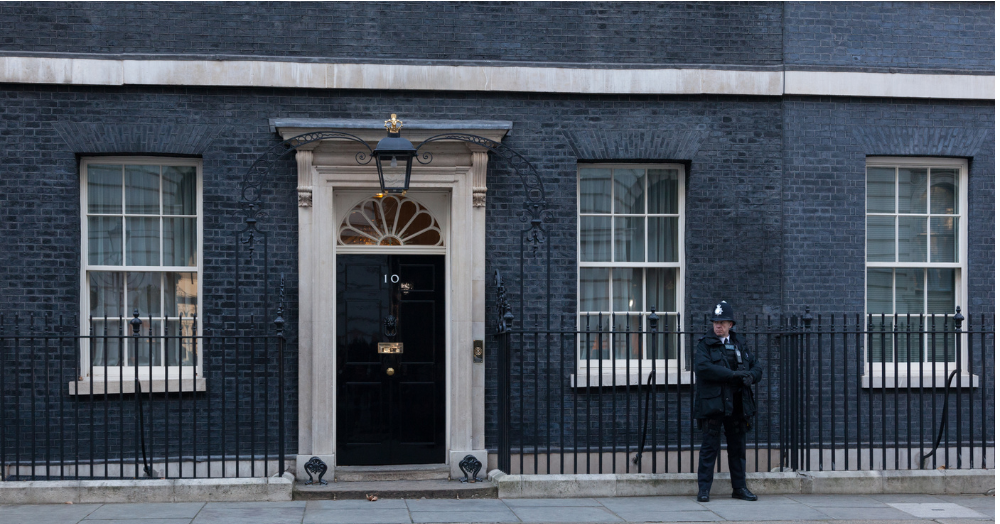
Keir Starmer's resignation last week was a big political moment by anyone's measure. He's the sixth Prime Minister to leave office in a decade, and the seventh that the country will have seen by the time his successor walks through the door of Number 10.
My honest answer, after more than two decades in this industry, is the same answer I'd have given in 2019, in 2022, and again last summer. Politics matters at the edges. The cost of borrowing matters in the middle. Confidence sits on top of both, and it is confidence that we should all be focused on protecting right now.
What the last four PM exits actually did to housing
Let's look at the record rather than the rhetoric.
When Theresa May resigned in June 2019, the housing market saw little impact. There was a short dip in buyer registrations, a few delayed listings, and then activity picked up again. The reason was simple. Five-year fixed mortgages were available at under 2%, and affordability was holding up. Cheap money does an awful lot to soften political shock.
Boris Johnson's departure in July 2022 followed much the same pattern. A short pause, headlines about uncertainty, and then transactions returned to the path the fundamentals were already setting. People didn't suddenly stop needing to move because the man at the top had changed.
Liz Truss could be referenced as an exception to the rule, but it’s worth being precise here. The market reaction in the autumn of 2022 was less about Truss’ resignation and more about the mini-Budget that came before it. This is really what saw gilt yields spike, swap rates move overnight, and lenders pull thousands of mortgage products inside 48 hours. Demand collapsed because borrowing costs were repriced in real time. The political event was the trigger, but the economic mechanism was what did the damage.
Rishi Sunak's exit after the 2024 general election was, again, a fairly quiet event for the housing market. Transactions kept moving. Buyers kept registering. The market did what it always does, which is getting on with it.
The pattern is consistent. Resignations create short-term noise, but they very rarely have a material impact on prices or volumes for long. What does shift the dial, every single time, is the cost of money.
Where we are right now
This is where today's situation gets more interesting, and where I think buyers and sellers should focus their attention.
The Bank of England held the base rate at 3.75% on 18 June. The vote was 7 to 2. And here's the important bit. Both dissenting members voted to raise rates, not cut them. That's not a committee in any rush to give the market an easy ride.
The average two-year fixed mortgage rate is sitting at 5.58% according to Moneyfacts, with the average five-year fix at 5.56%. The ten-year gilt is around 4.85%. These are the numbers that determine whether a buyer can stretch to the home they want, or whether a seller's asking price translates into a deal. The rates have far more influence on the next six months than the identity of the Prime Minister.
Then there's the conflict in the Middle East, which has fed into energy prices and inflation expectations and kept the cost of borrowing higher than most of us expected by mid-2026. Markets had priced in further cuts before that all kicked off.
This is the context into which Starmer's resignation has landed. The market didn't really move on the news. Sterling dipped slightly against the dollar to around 1.32. Gilt yields nudged up and then settled. Housebuilders took a small knock as investors weighed up what an Andy Burnham government might mean for planning and housing policy.
What impact would Andy Burnham have on the property market as Prime Minister?
Andy Burnham is the clear front-runner to replace Starmer, and his policy positions are, of course, likely to have some material implications for the UK property market.
One significant - and potentially positive - change could lie in the realm of stamp duty. Burnham has previously backed proposals from the campaign group Fairer Share, which would scrap stamp duty and council tax entirely and replace them with a flat 0.48% annual tax on a home's current value. Scrapping stamp duty would, in my view, be one of the single most powerful tools to unlock transactional activity in the UK property market. It is the tax that stops people from moving. Take it away and you free up family homes, downsizing decisions and second stepper moves all at once. Stamp duty raises around 14 billion pounds a year for the Treasury, so finding a replacement is no small task, but the principle of taxing what people own rather than what they buy is one I'd encourage any incoming Prime Minister to take seriously.
The flip side, of course, is that an annual property levy would hit certain regions and certain price brackets harder than others. London and the South East would feel it most. Landlords would need to reassess. And anything that follows the Renters' Rights Act with a further interventionist push on the rental market should be watched carefully.
There's also a question over whether Rachel Reeves stays as Chancellor. For my money, that appointment will matter more for housing than the identity of the Prime Minister. Markets watch the Chancellor closely, and mortgage pricing follows the bond market's reading of fiscal credibility. Get that wrong and we all feel it.
My advice to anyone moving this summer
Get on with it.
Around 1.8 million fixed-rate mortgage deals are coming to an end this year. If yours is one of them, talk to a broker now rather than waiting for the political picture to clear. It probably won't, not for several months, and the cost of waiting is rarely lower than the cost of acting.
If you're selling, the ‘3 P’s’ apply just as much today as they always have. Price, presentation, publicity. If the property is priced correctly, presented in its best possible light and marketed effectively, it will sell. Motivated buyers are still active. Political headlines don't make people stop wanting to move home. Jobs, schools, relationships and life events do that, and none of them pause for a leadership contest.
The property market has lived through six Prime Ministers in ten years. It will live through the seventh. What it needs from whoever holds the keys next is what it has always needed. Stability on tax, certainty on planning, and a Chancellor who keeps the bond market on side. That, and a recognition that home ownership matters to millions of people. Whoever ends up in Downing Street, that's the test they'll be measured against.
Life doesn't wait for the perfect moment, and neither should your plans. If you're thinking about moving, we'd be delighted to help you take the next step with confidence. Lets Chat.
Article by Jason Tebb, President of OnTheMarket.